
The Inherent Shortcomings of Polyurethane Catheters

By Eddie Korycka, MSN, RN, VA-BC
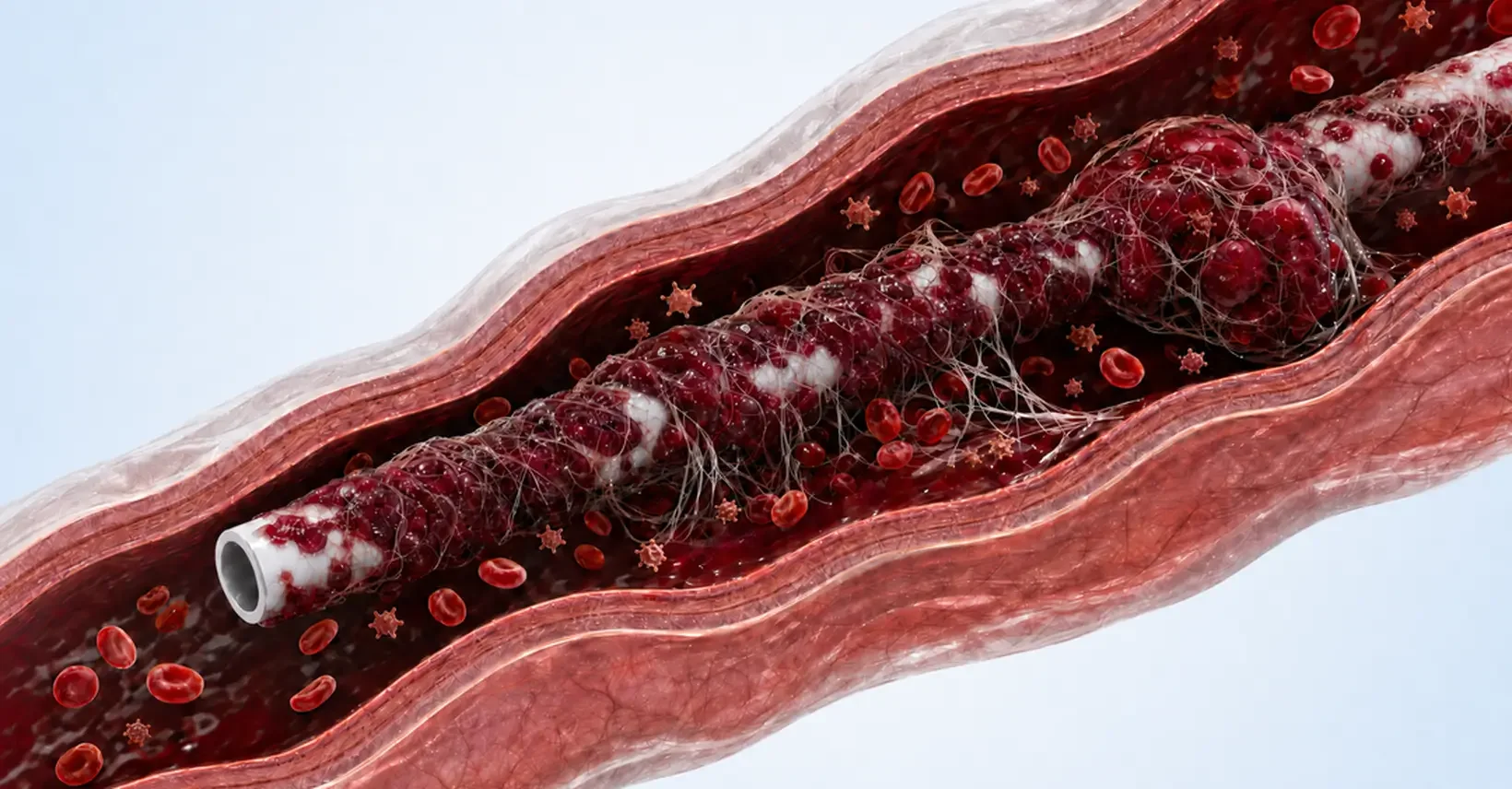
From occlusions and thrombosis to infections, nurses handle catheter-related complications every day. While polyurethane is the standard material that is currently used for catheters, it has increasingly proven to be a substandard solution for patient care.
Central line catheters have 15-30% complication rates, with occlusion, thrombosis, and infection being the most frequent complications.[1,2]
The inherent issue is that polyurethane is a hydrophobic material, meaning it repels water. Platelets in our blood naturally adhere to materials that are stiffer than their normal surroundings.[3] They recognize polyurethane’s tacky, rough surface as a foreign body, inciting the build-up of thrombus. That’s one of the root causes of common complications with polyurethane catheters.[1,4]
There have been attempts to enhance polyurethane since the 1990s. This includes strategies that bundled care elements like skin preparations with chlorhexidine, maximal barrier kits and flushing protocols. However, nurses are still dealing with the same polyurethane catheter-related complications after all these decades.
We can’t keep using the same catheter materials and expecting different outcomes. Nurses, patients, and facilities alike can no longer afford the shortcomings of polyurethane.
Polyurethane Innovation Has Come Up Short
There is increasingly strong evidence that innovation in polyurethane catheters has reached its limit, and that a new solution is needed altogether. Polyurethane as a material carries inherent risks for patient outcomes, and attempts to alter the material with coatings have not demonstrated clinical superiority.
A large prospective cohort study of more than 40,000 patients across 52 Michigan hospitals found no reduction in VTE or occlusion risk with anti-thrombogenic polyurethane PICCS.[5] The study also found no reduction in risk of CLABSI with antimicrobial polyurethane PICCS.[5]
Another study yielded similar results. A multi-center randomized control trial revealed high complication rates for polyurethane catheters of all varieties. The 2025 study found that standard polyurethane catheters carried a 21.7% complication rate, and innovations like coatings did not improve outcomes.[1] Chlorhexidine-coated polyurethane actually led to the highest occlusion and complication rates in the study.[1] Meanwhile, fluorinated hydrophobic polyurethane did not reduce the risk of device failure due to noninfectious or infectious complications.[1]
Yet another study supports these findings. In a systematic review of meta-analysis of 232 studies with 9 meeting the inclusion criteria, different central venous catheter (CVC) materials and designs were not associated with a reduction in the risk of thrombosis, occlusion, catheter-related bloodstream infection (CRBSI) or local infection, nor catheter fracture.[6] They were also not associated with any significant difference in dwell time.[6]
In short, polyurethane catheters carry persistent risks to patients despite decades of innovation. Those shortcomings have a direct impact on the work nurses do everyday.
Polyurethane Catheters Disrupt Clinical Workflows
Traditional polyurethane catheters and their associated complications cause frustrating workflows for nurses and a poor experience for patients.
Occlusions on polyurethane catheters often require frequent replacements, causing shorter dwell times and more unnecessary sticks for patients. The accumulation of thrombus may also require the administration of “clot-busting” thrombolytic agents, further exposing the patient to bleeding complications.[7]
These speedbumps in treatment are a particular concern for critically ill patients, where catheter replacements impact the flow of care. Treatment delays may cause disruptions to infusions and antibiotics, extended lengths of stay, or elevated rates of DVT.[8,9]
Polyurethane Catheters Carry a Large Price Tag for Hospitals
For hospital systems, the complications associated with polyurethane catheters have wide-reaching effects including a direct impact on reimbursement.
Polyurethane catheter-related complications have been shown to increase the patient’s length of stay. Based on a review of MedPAR FY2020 data, inpatient LOS involving PICC insertions or revisions increased by 2 days when occlusions were present, and increased by more than 5 days when thrombosis/DVT or infection were present.[9]
A prospective multicenter study of ICU patients found that patients who develop catheter-related thrombosis can have a 2.6 times higher risk of catheter-related sepsis.[10] CRBSIs and CLABSIs like these are among the leading causes of morbidity and mortality in hospitalized patients, both of which have a profound impact on reimbursement.
By one estimate, just a 50% reduction in catheter-related complications could lead to savings of $1.8 million annually for a typical 1,000-bed acute care facility. This potential savings is based on an integrative review of common PICC- and midline-related complications including thrombosis, blood infections, and occlusions as well as ICD-10 cost estimates.[9]
Transforming Vascular Access With Hydrophilic Catheter Innovation
Catheter materials should work with nurses, not against them. HydroMID® and HydroPICC® are made with Access Vascular’s patented hydrophilic biomaterial featuring MIMIX® technology, which is designed to mimic the body’s natural chemistry, reduce thrombus, and prevent the most common and costly complications in vascular access.
Connect with a sales rep to see how Access Vascular can put polyurethane-related complications in the past.
Sources
N Engl J Med. 2025 Jan 9;392(2):161-172. doi: 10.1056/NEJMoa2406815.
Moureau NL (2022). International Journal of Nursing Health Care Research 5: 1347. DOI: https://doi.org/10.29011/2688-9501.101347
Qiu Y, et al; Platelet mechanosensing of substrate stiffness during clot formation mediates adhesion, spreading, and activation; www.pnas.org/cgi/doi/10.1073/pnas.1322917111
Timsit JF, et al. (1998). Chest. :114(1):207-213.
Infection Control & Hospital Epidemiology (2022), 43, 427-434 doi:10.1017/ice.2021.141
Worldviews Evid Based Nurs. 2020 Oct;17(5):376-384. doi: 10.1111/wvn.12472.
Eur J Clin Invest. 2025;55(1):e14311. doi:10.1111/eci.14311
Presented at the Infusion Nurses Society Annual Meeting; 2025. Data on file: Access Vascular ML-0499.
Int J Nurs Health Care. 2022 Res 5: 1347. DOI: 10.29011/2688-9501.101347
Chest. 1998 Jul;114(1):207-13. doi: 10.1378/chest.114.1.207. Study based on evaluation of internal jugular and subclavian catheters.